
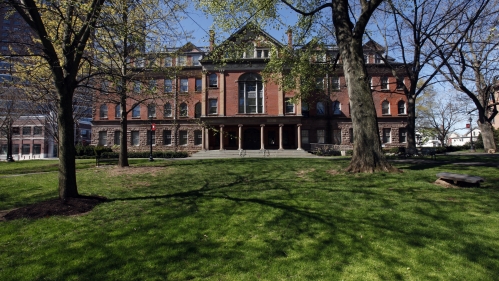
This fall, Rutgers School of Social Work welcomes three new students to its Ph.D. Program. We invite you to learn more about each student and their goals for their time at Rutgers.
Minyoung (Mia) Kang

Hello! 안녕(Ann nyeong)!
My name is Minyoung, and you can call me Minyoung or Mia (she/her). I am from South Korea, about a 14-hour flight from New Jersey and 1/98 the size of the US — a faraway, small, but vibrant country!
Since coming to Rutgers School of Social Work, everyone’s kindness and warm welcome have helped me feel safe, supported, and proud to be part of this community. I am excited about what I will learn and experience here, and I am deeply grateful for the opportunity to contribute to the Rutgers School of Social Work community.
Can you share a bit about your background in social work?
I would like to share two things that have been a lasting source of motivation for me in social work. One is the courage of survivors of violence, and the other is the quiet fortitude of caregivers. I grew up in the warm care of caregivers, and nearly everyone who stayed close to me was also a survivor of violence. I think I spent much of my life growing up wondering how I could care for them in return, and how we could make life a little kinder. That is what led me to social work.
As an undergraduate, I trained as a counselor for survivors of sexual and domestic violence, hoping to learn how to be there for them in ways that truly mattered. Learning about the history of policy changes, I realized that the systems protecting vulnerable people did not simply fall from the sky. They had passed through countless voices and hands of ordinary people who were calling for change. I began to hope that when the next wave of change came, I could be part of it. Since then, I have continued to study women’s lives and social welfare and have taken part in various policy intervention research projects in Korea.
What are your research interests?
To put it simply, my research interests are feminized care and poverty. Across centuries and countries, whether in homes or hospitals, those who provide care have been expected to embody femininity, in their bodies or at least in the way they care. And of course, many of those caregivers were already living in poverty, or right on its edge. Is it that poor women end up providing care, or that giving care makes them poor? This is an old question of mine. I want to study social policies that can break the persistent link between care and poverty.
My master’s thesis branched out from this too. My question was, “How is the welfare state dumping care?” I examined welfare policies that shift care responsibilities onto families, markets, and women, and the consequences that follow. In my Ph.D. studies, I hope to take this work further by looking more closely at the lives of those who remain with care. Can we build a society where becoming a caregiver is not something people have to fear or turn away from?
Why did you choose to attend Rutgers School of Social Work?
Rutgers School of Social Work was a place where the kind of research I wanted to pursue on care, poverty, and women’s lives was already being done. The more I learned about the Rutgers program, the more confident I became that its faculty, students, and research resources could provide a strong foundation for me.
More than anything, what made Rutgers my final choice was the conversation during my interview. We shared our genuine thoughts on the value of social work research and what the role of social work researcher should be. For a moment, I think I forgot that I was in such an important moment of decision. When I received the offer from Rutgers, I knew I wanted to grow among people who could keep reminding me why this work matters and how to approach it with care and responsibility toward the world. Since coming here, I have come to feel that I made the right choice. I am deeply grateful to Dr. Simmel, Dr. Akincigil, and Dr. Marçal for the conversations we shared then, and to the Rutgers community for welcoming me so warmly now.
Can you tell us about your most recent professional position?
During my master’s program, I worked on research projects with government agencies and policy research organizations in Korea. After graduation, I worked as a data researcher at the Population Center of the National Assembly Futures Institute. I wanted my research to contribute directly to policy change, so I actively sought opportunities to work where policies are actually discussed, shaped and changed.
Through those experiences, I worked with many researchers, policymakers, decision-makers, and activists. More importantly, I met the people who should be at the center of all change: the young carers, care workers, NGO workers, and many others. I learned from their voices, experiences and knowledge. I hope to keep doing this work, and to do it better.
I have also been involved in many student activities and research groups. In 2022, with support from the Korean Academy of Critical Social Welfare, I started a network for graduate students studying social policy. Today, around 200 graduate students are part of that network. I am a member of Team SWIFT (Social Welfare with Intersectional Feminism Theory). It is a community of social workers, activists, and researchers who come together to study and discuss intersectional feminism and social welfare.
I have always enjoyed researching, talking, reading, and holding seminars with others. At Rutgers, I hope to keep thinking about what we might be able to build and do together!
What do you hope to get out of the Ph.D. program?
I hope that the five years of my Ph.D. program will give me the confidence to trust my questions and my research. There have been times when I wondered whether I was heading in the right direction.
But I also learned that clarity comes with time. The longer I stayed with a question, the more I understood it, and the less afraid I became of not knowing the answer right away. I hope that the knowledge, questions, and experiences I gain during my Ph.D. will help me support people and persuade others to join in.
To get there, I think I will need guidance and many conversations with all of you along the way. So, I look forward to learning from you over the next five years. Thank you in advance for being part of that journey!
Colette Reasonover
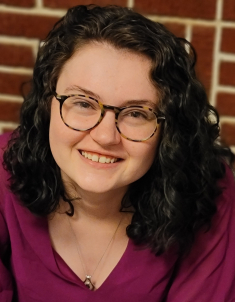
Colette is an interdisciplinary researcher and Ph.D. student in social work at Rutgers University. Their scholarship leverages a highly unique academic foundation. They hold a Master of Arts in English with a concentration in disability studies and a Bachelor of Science in mathematics from Tulane University as well as a Master of Social Work from Rutgers University.
Colette’s primary research focus lies at the intersections of dementia and caregiving. Drawing from extensive interdisciplinary training, they are dedicated to collaborative scholarship that navigates complex social challenges to better support aging populations and their care networks.
While their current scholarly trajectory centers on dementia care, Colette brings a broad, versatile perspective to their work. They have previously co-authored multiple peer-reviewed articles and research papers examining addiction, early childhood development, and housing hardship. By integrating the rigorous analytical methodologies of mathematics with the nuanced, humanistic lens of disability studies, their research aims to advance academic discourse and inform evidence-based, compassionate policy interventions.
Can you share a bit about your background in social work?
I worked as a family caregiver for a person living with dementia for five years prior to my MSW. I also received my MSW this May from Rutgers. Beyond that, most of my social work adjacent work has involved advocacy work at the local level back in New Orleans.
What are your research interests?
I am primarily interested in dementia, disability, and caregiving. I have a particular interest in the dynamics that might occur for early on-set dementia diagnoses. For instance, people living with early on-set often require care at younger ages, usually from their younger, sometimes minor, children and often live longer with the condition. My hope is that by looking at large-scale data sets, I can help identify successful aspects of our current system and gaps that could be addressed.
Why did you choose to attend Rutgers School of Social Work?
Rutgers integration with the broader New Jersey community was definitely a big draw for me. Research is often most helpful as it impacts the real world. With Rutgers connections to not only the state but, as a nationally recognized university, to the country as a whole, the research being done at Rutgers will surely be impactful. Additionally, when talking to professors and students at Rutgers, particularly during my MSW, I was struck by how collaborative and open the departments were with one another, and how many more opportunities were available to students and researchers alike to do interdisciplinary work.
Can you tell us about your most recent professional position?
I have a background in tech. Prior to that, I was also a teacher and a tutor.
What do you hope to get out of the Ph.D. program?
There is so much I hope to get out of it. In short, I would like to be an impactful researcher, a quality communicator, and a strong advocate. I would like to contribute towards improving policy for people living with disabilities, particularly people living with dementia, and their families. I am a firm believer that when you help one group improve their experience, you often help many others. As they say, a rising tide raises all ships. I would like to be part of that tide.
Kevin T. O'Keeffe, MSW, LCSW

Can you share a bit about your background in social work?
I have over a decade of direct social work experience including in community mental health and substance use, acute care settings as a discharge planner, ICU social worker, and palliative care social worker. I was the primary ICU social worker during the COVID pandemic in a hospital in upstate New York, and I recently held leadership positions in a palliative care program in North Philadelphia. I have provided supervision and mentorship across my career to MSW students, early career social workers, and across disciplines. I was a Zelda Foster Palliative Care Leadership Fellow through NYU Silver School of Social Work, and I am currently the co-chair for the education committee through the Social Work Hospice and Palliative Care Network (SWHPN).
What are your research interests?
My research interests focus on the psycho-social care provided by palliative care social workers to patients with dual palliative care/end of life and substance use needs. I am interested in understanding the psycho-social needs of these patients and developing evidence-based practices for social workers to learn. I have a current manuscript in the works that examines the experiences of inpatient palliative care social workers with those patients.
Why did you choose to attend Rutgers School of Social Work?
I chose Rutgers based on the interdisciplinary lens of the University and School of Social Work. I am eager to work with many different faculty whose expertise aligns with my research goals and can teach critical research skills to improve the lives of patients and families living with serious physical illness and substance use. I was also inspired by the SSW's mission and strategic plan to train new social workers to work in complex healthcare systems.
Can you tell us about your most recent professional position?
I am transitioning into the Ph.D. program from being the Director of Palliative Care at Temple University Hospital in Philadelphia, PA. I held that position for two years. I started my time at Temple as program coordinator, then manager. In these roles, I continued to provide direct practice to patients and families facing life-limiting illness in an acute care setting. I also was responsible for daily program operations, program growth, and supervision and mentorship to a team of palliative care social workers and chaplains.
What do you hope to get out of the Ph.D. program?
I hope to produce knowledge about patients with palliative care and substance use needs to improve psychosocial care provided to them. I hope to synthesize my rich clinical background with rigorous research methodology to develop training for social workers on this population and promote social workers as leaders in this field.