
Ayse Akincigil
Ph.D., Rutgers University, Department of Economics
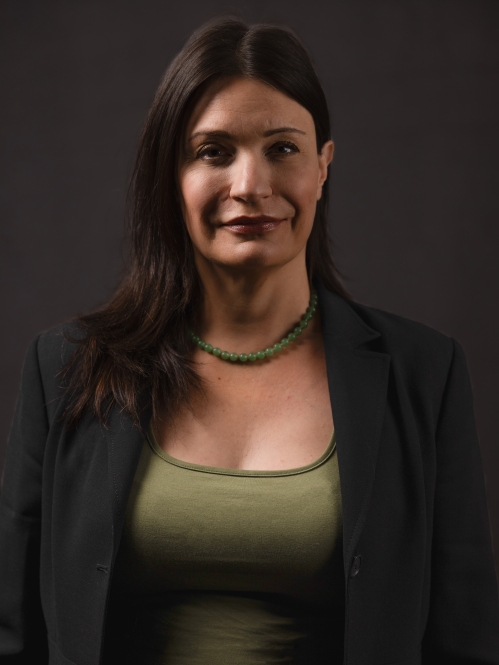
Bio:
Equity-Driven Research at the Nexus of Economics, Health Services and Social Work
The overarching goal of Dr. Ayse Akincigil's (a.k.a. Dr. A) research is to improve healthcare access and quality for populations experiencing systemic inequities in the US, drawing from her background in economics to inform work at the intersection of health services research and social work. She grounds her research in policy analysis at the state and federal levels to ensure it translates into meaningful, systemic change.
While pursuing her doctoral degree in economics, Ayse joined the Rutgers Institute for Health, one of the university's pioneering interdisciplinary research institutes. This experience deepened her subject matter expertise in US healthcare policy and introduced her to the strengths of interdisciplinary research and team science. It was also there that she identified social policy as a critical focus area, ultimately leading her to join the Rutgers School of Social Work.
When Ayse joined the School of Social Work, few economists had made the transition. Economics trained her to analyze how systems function—and malfunction—while social work offered a disciplinary home explicitly committed to addressing those malfunctions on behalf of marginalized populations. She brings the methodological precision of econometrics to questions at the heart of social work: service, social justice, and the dignity and worth of every person.
Her economics training gave her a framework for understanding how market dynamics create the systemic challenges social work addresses—and what policy levers might counterbalance them. Markets systematically undervalue human services because their benefits—keeping people functioning, at home, and out of costly institutional settings—are diffuse and difficult to monetize. Without rigorous evidence of value, these services struggle to secure adequate funding. Ayse addresses this gap by applying health services research methodologies to quantify impacts. Her research on community-based services for older adults, for instance, demonstrated how integrated service models can reduce healthcare expenditures while supporting aging in place.
By integrating economic tools with social work's commitment to equity, Ayse produces research designed to change systems—not just describe them.
Learn more about her work as the Scientific Director of Health Services Research Branch in the Hub for Aging Collaboration.