
Adrian Gale
MSW and PhD, University of Michigan
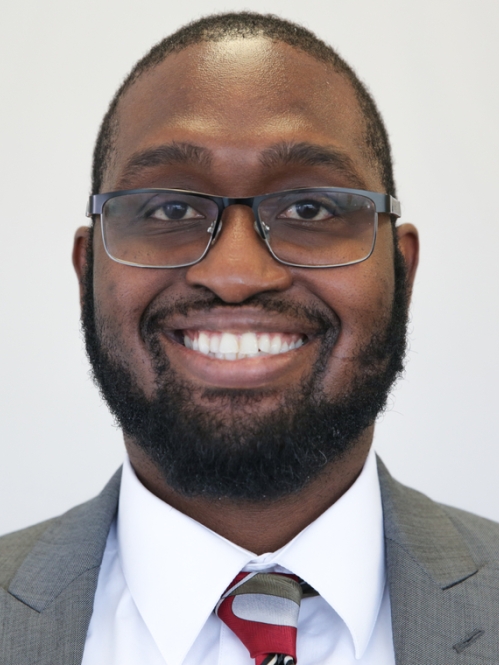
Bio
Prior to joining the faculty at Rutgers University, Dr. Gale was a WT Grant-funded Postdoctoral Fellow. His current research seeks to understand how Black youth’s schooling experiences in general, and Black boys’ experiences in particular, contribute to the achievement gap. In the United States, where educational success is generally represented by factors like standardized test scores and college degree attainment, significant racial inequities exist such that youth of color continue to underperform relative to their White peers. Scholars have found that these inequities, referred to as the racial achievement gap, are related to a lack of quality educational opportunities for youth of color. His research takes a transactional perspective when examining this gap in educational opportunities, and in identifying ways to close it. This perspective holds that outcomes (e.g., college degree attainment) are a function not just of what a youth is exposed to in a particular environment (e.g., home, school), but also what they bring to that situation (e.g., attitudes, behaviors). Thus, in order to reduce inequities in educational opportunities, youth related factors as well as environmental factors need to be addressed. Gale's work seeks to address educational inequities by identifying factors that promote school success and reduce risk for school failure (e.g., increases test scores, GPA, high school graduation rates and college attendance). Ultimately, he endeavors to use knowledge gained through identifying these factors to create interventions that address educational inequalities by leveraging youths’ strengths.
Selected Recent Publications:
Thomas, A., Gale, A., & Williams, E.-D. G. (2026). Depression among Black and African American individuals. In T. M. Olino, J. W. Pettit, R. C. Boyd, B. C. Chu, E. P. Hayden, & D. A. Pizzagalli (Eds.), APA handbook of depression: Minoritized populations, lifespan development, assessment, and treatment (pp. 23–40). American Psychological Association. https://doi.org/10.1037/0000438-002
Gale, A., & Nepomnyaschy, L. (2025). Perceptions of school climate and depression among Black youth: Do sex and income matter? Developmental Psychology. Advance online publication. https://doi.org/10.1037/dev0002054
Gale, A., Williams, K., & Gutierrez, A. (2025). Understanding the logic and aims of rutgers future scholars: A college access program providing hope and opportunity to New Jersey. Journal of Higher Education Outreach and Engagement, 29(4), 73–84. https://openjournals.libs.uga.edu/jheoe/article/view/3995/3598
Gale, A., & Nepomnyaschy, L. (2023). School connectedness and mental health among Black adolescents. Journal of Youth and Adolescence, 53, 1066–1077. https://doi.org/10.1007/s10964-023-01898-0
Gale, A. (2020). Examining Black adolescents’ perceptions of in-school racial discrimination: The role of teacher support on academic outcomes. Children and Youth Services Review, 116, 105173. https://doi.org/10.1016/j.childyouth.2020.105173
Lateef, H., Gale, A., Boyd, D., Arab, H., Amoako, E. & Williams, E. (In Press). African-Centered Social Work in the 21st Century: A Content Analysis.Social Work.
Gale, A., Lateef, H., Boyd, D., & Williams, E.* (Accepted). A Review of School-Based Interventions for Black Boys’ School Success. Urban Review.
Gale, A., & Nepomnyaschy, L. (2023). School Connectedness and Mental Health Among Black Adolescents. Journal of Youth and Adolescence. https://doi.org/10.1007/s10964-023-01898-0
Gale, A., Johnson, N. C., Golden, A., Channey, J., Marchand, A. D., Anyiwo, N., & Byrd, C. M. (2023). Reflecting on change: Critical consciousness as a protective factor for Black youth. Cultural diversity & ethnic minority psychology, 10.1037/cdp0000612. Advance online publication. https://doi.org/10.1037/cdp0000612
Gale, A., Williams, A., Rowley, S., Boyd, D. (2021). The Role of Parents’ School Climate Perceptions on Attainment Expectations for Black Middle Schoolers.Journal of Child Family https://doi.org/10.1007/s10826-021-02156-2
Gale, A., & Dorsey, M. (2020). Does the context of racial discrimination matter for adolescent school outcomes?: The impact of in-school racial discrimination and general racial discrimination on Black adolescents’ outcomes. Race and Social Problems, 12(2), 171–185. https://doi.org/10.1007/s12552-020-09286-0
Gale, A. (2020). Examining Black adolescents ’ perceptions of in-school racial discrimination: The role of teacher support on academic outcomes. Children and Youth Services Review, 116(June), 105173. https://doi.org/10.1016/j.childyouth.2020.10517
Williams, A., Gale, A., & Dorsey, M. (2019). Relational permanence and psychological well-being among Black adolescents in foster care: does gender make a difference? Journal of Public Child Welfare, 14:4, 374-394, doi: 10.1080/15548732.2019.1636922
Patton, D. U., Miller, R. J., Garbarino, J., Gale, A., & Kornfeld, E. (2016). Hardiness scripts: High-achieving African American boys in a Chicago charter school navigating community violence and school. Journal of Community Psychology, 44: 638-655. doi:10.1002/jcop.21791
Rowley, S. J., Ross, L., Lozada, F., Williams, A., Gale, A., & Kurtz-Costes, B. (2014). Framing black boys: Parent, teacher, and student narratives of the academic lives of black boys. In L. S. Liben & R. S. Bigler (Vol. Eds.) The role of gender in educational contexts and outcomes. In J. B. Benson (Series Ed.), Advances in child development and behavior: Vol. 47 (pp. 301–332). London: Elsevier.